What the official launch notes confirm
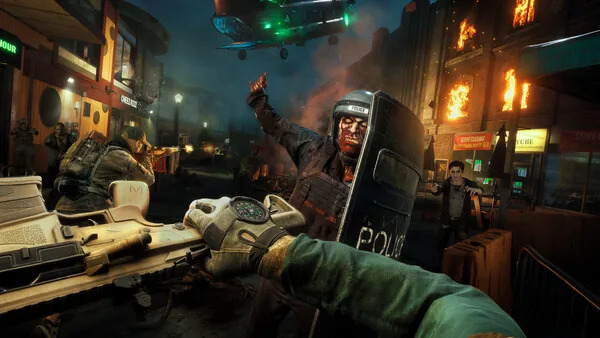
The developer’s launch article for the 1.0 release describes difficulty options as a trade: higher rewards come with increased zombie numbers and challenges. That statement supports a direct difficulty effect. It does not state that the game reads the number of human players and then recalculates every wave, objective timer, supply table, or special enemy for that match.
The same article says that you can manage up to three Responders at your campsite. That is useful context for a one-to-three-player comparison, but a roster limit is not the same as a guaranteed party-size scaling rule. It also describes Early and Final extraction and a threat of permadeath, so the pressure of a run can change even when the enemy count is not dynamically adjusted.
Those distinctions matter because a screenshot, a busy lobby, or one difficult three-player match cannot prove the underlying formula. Use the official release context for confirmed facts, then label any run observations as observations from a particular build.
What “scale with players” could mean
Players use the phrase for several different systems. Before comparing notes, define the claim you are testing.
| Possible meaning | What would change | Evidence needed |
|---|---|---|
| Difficulty scaling | A selected difficulty raises zombie numbers or other challenges. | The difficulty description or repeatable runs at the same party size. |
| Party-size scaling | The same mode and difficulty generate different enemies when the human count changes. | Matched one-, two-, and three-player runs on the same route. |
| Mode or map variation | A different scenario has different objectives, spaces, or waves. | Same mode and map labels, not just a similar-looking screenshot. |
| Queue context | The wider population changes how quickly a squad fills. | Timestamped population data; it says nothing about a match formula. |
Only the second row answers the exact player-scaling question. The first is confirmed in broad terms by the launch notes; the third and fourth are common reasons that informal comparisons become misleading.
Practical answer for one to three players
For a solo run, plan as though the route must be solved with the resources and information you personally carry. For a duo, do not assume the game will halve the threat; use the second player to cover an interaction, watch a retreat, or carry a different answer. For a full three-player group, do not assume that extra people make the map safe; the team may simply create more noise, more movement choices, and a larger extraction decision.
This is a planning rule, not a hidden developer statistic. Until a current patch note or controlled test demonstrates automatic scaling, keep the difficulty selection and mode visible in your notes. If the same route feels easier with three players, explain whether the difference came from coverage, healing, communication, or a genuine spawn change.
A repeatable party-size test
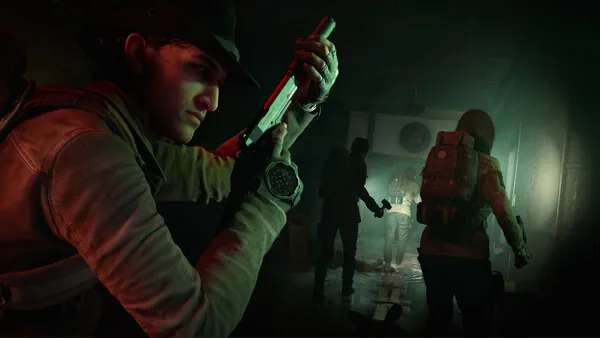
If you want an answer that can survive a patch discussion, make the comparison boring and repeatable. One run is a story; several matched runs are evidence.
- Lock the variables. Use the same mode, map, objective type, difficulty, region, patch, and starting route. Record the date and any hotfix note.
- Run the one-player baseline. Note the first contact, wave timing, special enemies, objective timer, supply opportunities, and extraction pressure. Do not count a different room as a new rule.
- Repeat with two players. Keep the same route and write down what changed in the world versus what changed because a teammate could cover or revive you.
- Repeat with three players. Compare the same checkpoints. Separate enemy count, enemy behavior, item availability, and team execution into different columns.
- Repeat each condition. Three runs per condition is a practical minimum for a field note. If the game selects scenarios randomly, expand the sample rather than pretending one lucky route is a formula.
- Publish the boundary. State the build, sample size, map, difficulty, and what you could not observe. A careful “not confirmed” remains useful after an update.
The map and objective notes help keep the scenario constant. The player count tracker is useful for queue context, but it should stay out of the match-scaling column.
How to plan when scaling is unconfirmed
Solo: reduce decisions before reducing difficulty
Choose one objective, one return landmark, and one explicit extraction trigger. The solo survival guide covers the route discipline that matters when nobody else can confirm your memory. Do not use a low population reading as proof that a solo match will contain fewer enemies.
Duo: split jobs, not assumptions
Let one player own the interaction while the other watches the route, but keep a shared fallback. A duo can feel dramatically stronger because it reduces blind spots. That is team coverage, not automatically scaled enemy health or counts.
Three players: protect the exit plan
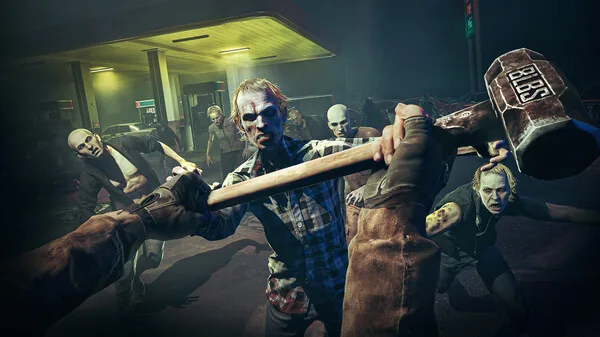
Three Responders can cover a larger space, yet they can also make noise and extraction movement harder to coordinate. Keep one resource for the route-changing moment. If the official difficulty option raises zombie numbers, decide whether the extra reward is worth the pressure before you load in.
Evidence that should not be conflated
- Player count and party size are different. A live tracker describes a wider population snapshot; party size describes the humans in one match.
- Difficulty and scaling are different. A higher setting can raise challenge by design without reacting to the current number of teammates.
- Maps and modes are different. A Survival holdout and an Objective route may produce different pressure even with the same squad.
- Patch notes outrank old clips. Keep the capture date attached to every observation, especially after a balance update.
- A tactical outcome is not a spawn rule. Better spacing, revives, a firearm, or a saved throwable can make a run easier without changing the simulation.
FAQ
Does No More Room in Hell 2 scale with players?
No public official source currently confirms a continuous party-size scaling formula. The official launch article confirms higher difficulty options can increase zombie numbers and challenges, which is a separate setting. Use matched runs if you want to document a current-build observation.
Does a higher difficulty add more zombies?
The official launch article says that difficulty options trade greater rewards for increased zombie numbers and challenges. It does not provide a complete formula for every mode, so re-check the live build before turning that broad statement into a precise count.
How can I test party-size scaling in No More Room in Hell 2?
Keep the map, mode, objective, difficulty, patch, and route constant. Repeat comparable one-, two-, and three-player runs, then record waves, special enemies, timers, supplies, and extraction pressure separately.
Is the No More Room in Hell 2 player count tracker evidence of scaling?
No. The tracker gives queue and population context. It cannot reveal how a particular match selected enemies or objectives, so use it as context and keep it out of the scaling conclusion.
Does a three-player party mean the map is easier?
It can be easier to cover an interaction, revive someone, or watch a retreat, but that is a team advantage. Do not describe it as automatic difficulty scaling unless a controlled comparison shows a world-state change.
Summary
The best current answer to “does No More Room in Hell 2 scale with players?” is cautious: official launch notes confirm that selected difficulty can increase zombie numbers and challenges, while a public party-size formula is not documented here. Plan one-, two-, and three-player runs around the same route, record the build and variables, and separate tactical teamwork from world-state changes. That approach gives readers a result they can update instead of a confident claim that will age badly.
Sources and date boundary
This guide was checked on October 14, 2026. The official launch article is the source for the 1.0 release context, difficulty wording, three-Responder campsite context, and extraction framing. The official Steam listing is linked for the live store description. Exact enemy behavior, mode rules, and party-size handling may change after an update.