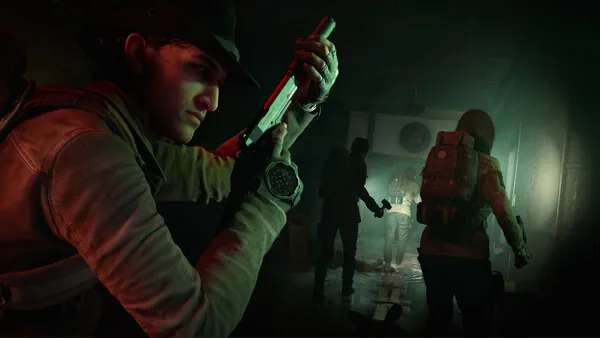
No More Room in Hell 2 weapons: what to prioritize first
Weapon choice is really a four-part decision: reach, noise, inventory pressure, and the danger of the next objective. A weapon that wins a single doorway can still be a bad carry if it consumes rare ammunition, attracts a horde, or leaves no answer for the final extraction. Read the map and mission state before treating a damage number as the whole story.
The official product description says that ammunition is scarce and that the game includes both professional and improvised weapons. That combination rewards a mixed loadout. One player can carry a firearm for controlled distance, another can make a melee weapon do the routine work, while a third keeps a throwable for the moment when the squad has to move through a blocked route. This is a field plan, not a claim that every lobby must use the same composition.
| Category | Use it when | Watch the cost |
|---|---|---|
| Melee weapons | A lone target, a narrow room, or a low-noise cleanup is the priority. | Reach, stamina, swing time, and the risk of being surrounded. |
| Firearms | You need distance, a fast answer, or a line of fire that melee cannot safely provide. | Ammo, noise, reload time, sightline, and friendly-fire pressure. |
| Throwables | A choke, rescue, area denial, or extraction window is about to collapse. | Limited stock and the danger of wasting the only answer to a crowd. |
| Attachments | The firearm's role is clear and the attachment improves that role. | Do not trade a reliable weapon for a theoretical stat gain. |
Melee weapons: the dependable first answer
Melee is not just the fallback for players who ran out of bullets. It is often the best way to manage the first isolated target without turning a small problem into a map-wide alarm. The Steam description specifically calls out visceral melee combat and gives a crowbar as an example of an improvised answer. The practical lesson is broader: make the weapon's reach and recovery fit the space in which you are fighting.
Use a compact melee option when you need quick turns in a room, and favor more reach when a doorway or corridor lets you control the approach. A heavier tool can feel reassuring but becomes a liability if its recovery leaves you exposed. When comparing “best melee weapon” or “melee weapons tier list” claims, ask three questions: can the whole squad maintain spacing, can the user retreat after a swing, and does the weapon preserve stamina for the next objective?
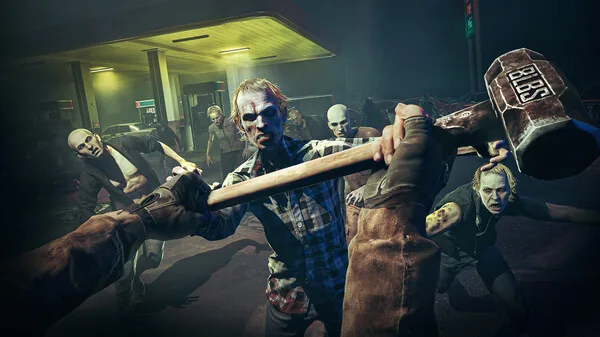
A practical melee example
Imagine a team entering a dark interior with one responder carrying a firearm and two responders able to work quietly. The melee players should clear the nearest safe targets and call out the first sound cue instead of swinging in the middle of the group. The firearm stays ready for a sudden runner or a target that breaks the formation. This division preserves ammunition while keeping an emergency answer available.
Firearms and attachments: spend bullets with a reason
Firearms are strongest when they change the geometry of an encounter: they let a responder work from distance, cover a retreat, or stop a threat before it reaches the group. They are weakest when used as a reflex for every zombie. The official store copy explicitly warns that ammo is scarce, so “all weapons” coverage should explain the resource loop rather than present an invented list of damage values.
The official description also mentions sights, scopes, and suppressors. Treat those as role choices. A sight can make a short-to-medium range weapon easier to place under pressure; a scope may be wasted if the mission keeps forcing close interiors; a suppressor can support a quieter plan but does not turn a loud mistake into a silent one. Exact attachment pools and tuning may change after patches, so confirm the live build before publishing a numerical recommendation.
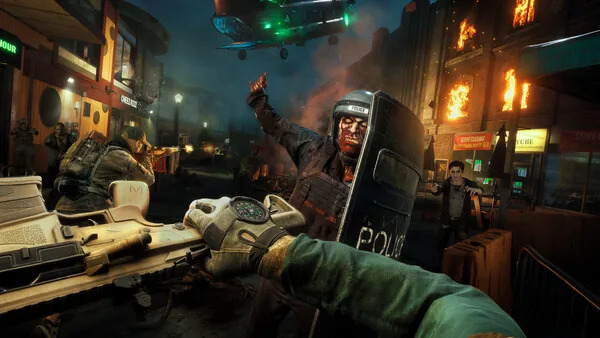
Throwables and tools: reserve the problem solver
The Steam description names proximity bombs and Molotov cocktails as examples of tools that let players use brains instead of brawn. Their value is not only damage. A throwable can buy a route, separate a crowd, protect a revive, or create a short window for extraction. That means the correct question is not “can I throw this now?” but “what later event would be impossible without it?”
- Before a choke: identify where the horde will be forced to pass, then throw only when the squad is ready to move through the opening.
- During a rescue: keep one player focused on the objective while another uses the tool to protect the interaction space.
- At extraction: do not arrive empty-handed if the route is known to compress the team into one doorway or vehicle path.
- After the throw: call the direction of movement so teammates do not stand inside the effect or waste ammo on the wrong target.
Weapon choice by mission pressure
| Situation | First choice | Backup plan |
|---|---|---|
| Quiet interior search | Melee with enough reach to keep spacing. | One controlled firearm user watching the exit. |
| Open street or long sightline | Firearm with an attachment that matches the range. | Move to cover rather than spending every round. |
| Blocked objective route | Throwable for area denial or a planned opening. | Retreat and re-route if the squad cannot follow safely. |
| Final extraction | Keep the most reliable weapon and reserve ammo. | Use melee for routine targets and tools only for the collapse point. |
This is also why a class page and a weapons page should remain separate. The classes guide is about responder roles and loadout identity; this page is about what the current encounter asks the loadout to do. If a weapon choice depends on the route, check the map notes. If it depends on the exit window, use the extraction checklist. A weapon is part of a run plan, not an isolated collectible.
What can change after a patch?
Weapon names, attachment availability, spawn rules, ammo frequency, sound behavior, and balance can all change with a live update. This page therefore separates confirmed official descriptions from field advice. The official Steam listing is the source for the broad arsenal, attachment, and throwable claims; the recommendation to preserve ammo or reserve a Molotov for extraction is practical guidance, not a developer guarantee.
When refreshing this page, check the live official store description and the game's release or patch notes before changing a table. Do not turn a single screenshot into a full inventory claim, and do not use a “tier list” headline unless a current, reproducible data set supports the ranking. That restraint makes the guide more useful when the game changes.
FAQ
What is the best melee weapon in No More Room in Hell 2?
There is no permanent best choice. Match reach and recovery to the room, preserve stamina, and use the weapon that lets the squad keep a retreat path. The official store copy mentions a crowbar as an improvised melee example, not as a universal winner.
Does No More Room in Hell 2 have weapon attachments?
Yes, the official Steam description mentions sights, scopes, and suppressors for firearms. Exact pools and tuning are version-sensitive, so verify a live build before stating a numerical advantage.
How should I use throwable weapons?
Keep proximity bombs and Molotov cocktails for an objective choke, rescue, crowd separation, or extraction problem. A throwable is most valuable when it creates movement space that bullets or melee cannot create cheaply.
Is ammo scarce in No More Room in Hell 2?
The official store description presents ammunition as scarce. Use firearms for distance and high-risk targets, then let melee handle routine work when the space is safe enough.
Summary
For a reliable run, build around the next decision: melee for controlled low-noise work, firearms for distance and emergency stopping power, throwables for route-changing moments, and attachments only when they support a clear role. The best weapons guide is not a frozen tier list; it is a plan that protects ammo, space, stamina, and the extraction window.