Evidence boundary: this guide separates facts from field advice. The three screenshots below are official Steam gameplay context, not a complete enemy catalogue. The page does not invent a special-infected roster or turn one update note into a permanent formula.
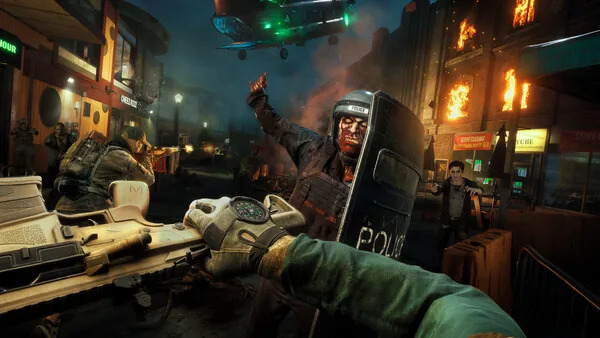
What is actually confirmed?
The official 1.0 release article describes an eight-player zombie shooter, two mission types, extraction pressure, infection, and difficulty options that can increase zombie numbers and challenges. It is a good source for the shape of a run, but it does not list every enemy as a numbered class. The official Steam page adds current update text that names normal and Prime Walkers in horde-composition notes and separately mentions riot shield zombies. That is enough to build a practical guide, but not enough to promise that the roster will never change.
| Confirmed lane | What the source supports | Useful response | Do not assume |
|---|---|---|---|
| Normal zombies | The release and store descriptions use zombies as the baseline undead threat. | Keep spacing, a fallback doorway, and a quiet answer for one target. | A fixed health value, speed, or spawn count across modes. |
| Prime Walkers | Official Steam update text names Prime Walkers in horde-composition context. | Call the target early, preserve a sight line, and avoid spending the whole reserve on one chase. | That every patch uses the same ratio or that the name implies a published stat block. |
| Riot shield zombies | Official Steam update text explicitly refers to riot shield zombies and their shields. | Change the angle, keep an exit, and let the team solve the front protection together. | That a frontal melee loop or one weapon always counters the shield. |
| Horde pressure | Difficulty and update notes refer to zombie numbers and composition changes. | Hold a reserve for the return route and read the room before committing to an objective. | That horde pressure is a separate named zombie type. |
The last row matters because players often search for a “type” when they are really feeling a composition change. A larger group of baseline zombies, a different mix of named threats, and a new route constraint can all make a run feel different without adding a new enemy model. Label the observation before you label the creature.
How to read a zombie type during a run
Look for the decision the enemy forces, not only its appearance. A baseline walker tests whether the squad can keep a lane quiet. A Prime Walker call tests whether the squad can focus without losing its route. A riot shield zombie tests angles and patience. These are behavior lanes, not a promise that every encounter follows a script.
- Identify the pressure. Is the threat closing distance, denying a sight line, pinning a doorway, or stretching the formation?
- Name the safe side. Tell the team which side of the room or street remains usable after the first attack.
- Spend only what changes the route. A firearm, throwable, or melee swing is valuable when it buys movement, not when it merely produces noise.
- Re-check after the first contact. The next wave, objective interaction, or infection state can make the original counter wrong.
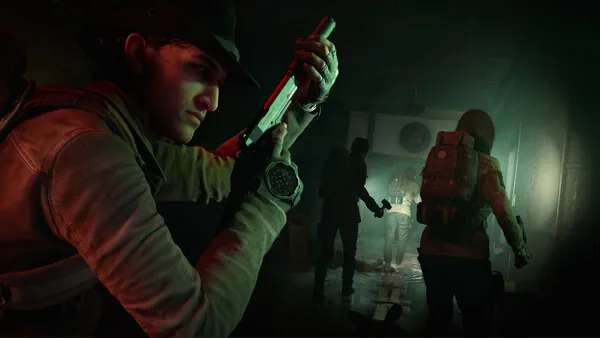
Normal zombies: preserve the quiet option
Normal zombies are the baseline against which every other pressure is felt. Their practical danger is not a single number; it is the way a quiet room becomes a noisy corridor when the squad overcommits. Keep one player watching the route behind the objective carrier, and avoid turning a single target into a chase that consumes stamina or ammunition.
Use a simple rule: if the target can be handled without closing the exit, handle it; if the target pulls the formation into an unknown room, stop and call the route. That rule links enemy advice to the existing beginner tips and map notes instead of pretending a generic “best weapon” solves every normal encounter.
Prime Walkers: a named pressure spike
Prime Walkers appear by name in the official Steam update context, which is stronger evidence than a community nickname. The public text does not give this page a durable health table or a guaranteed spawn rule, so the useful guide is procedural: call the target, protect the player who is interacting, and keep a retreat lane open. If the squad spends every resource before the objective is complete, the first win has created a later loss.
When a Prime Walker appears, decide who owns the target and who owns the route. The target player can maintain the sight line or controlled melee spacing; the route player watches the next doorway and calls an abort. The rest of the squad should not all turn toward the same animation. A threat that receives everyone’s attention can still win by moving the team into a worse position.
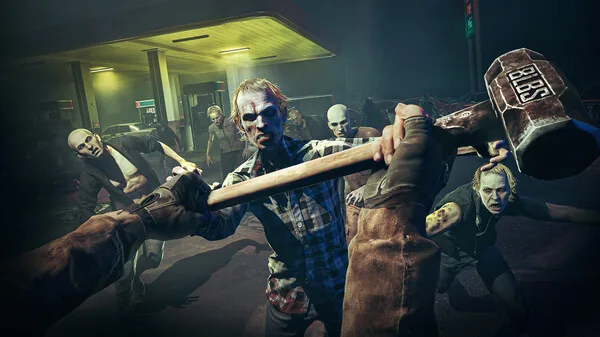
Riot shield zombies: solve the angle first
The official Steam update text explicitly calls out riot shield zombies and a fix for shields not spawning correctly. That is a concrete named variant and a reminder that visible equipment can matter to route decisions. The reliable first response is not “hit the shield harder.” Move the team so the shielded front is no longer the only direction that matters.
- Keep enough distance to avoid being pinned against a doorway or objective prop.
- Use a side angle or a teammate’s movement to make the front protection less decisive.
- Do not throw a route-control tool without naming where the team will stand afterward.
- Keep the extraction path in mind; a successful stagger is not useful if it seals the only exit.
Pair this page with the weapons guide for operating principles and the weapons tier list for situation-based comparisons. Neither page claims that one weapon is an official shield counter, and this guide keeps the same boundary.
Difficulty and horde composition are not the same as new types
The official release article says that difficulty options can increase zombie numbers and challenges. Steam update text also discusses changes to horde composition. That evidence supports a cautious conclusion: the threat mix can change with the live build and selected challenge, but the public pages do not publish a universal table mapping each difficulty to each zombie type.
Use the difficulty-scaling guide when you want to compare runs. Keep the map, mode, party size, patch, and route constant. Record the number of contacts, the named variants you actually saw, and the point at which extraction became unsafe. This turns “the game added more types” into a testable observation instead of a permanent claim.
What this page does not claim
No More Room in Hell 2 is an active game. A guide that lists every silhouette as a fixed class will age faster than one that shows its evidence boundary. This page does not claim a complete count, hidden special-infected names, exact health or damage values, a guaranteed Prime Walker ratio, or a universal riot-shield counter. Check the official Steam listing, update notes, and in-game behavior after a patch before treating a field note as a rule.
FAQ
How many zombie types are in No More Room in Hell 2?
The official public pages do not provide a complete permanent count. They give confirmed anchors such as normal zombies, Prime Walkers in update context, and riot shield zombies, while difficulty and horde composition add more variation.
What are Prime Walkers in No More Room in Hell 2?
Prime Walkers are a named zombie group in official Steam update text. Treat the name as confirmed, but verify current behavior in the live build instead of copying an old health, damage, or spawn claim.
How do I deal with riot shield zombies?
Keep an exit, change the angle, and coordinate the front pressure with a teammate. A frontal attack can waste time and resources, while a route decision can make the shield less important.
Are there special infected in No More Room in Hell 2?
The public sources reviewed here do not publish a complete “special infected” roster. This guide names only the variants supported by the official text and labels other observations as unverified until a source or repeatable test supports them.
Does difficulty add new zombie types?
The release article confirms increased zombie numbers and challenges at higher difficulty. It does not promise a fixed list of new variants for every mode, so keep composition and patch behavior separate from the type list.
Summary
The most useful answer to no more room in hell 2 zombie types is evidence-first. Normal zombies are the baseline, Prime Walkers are a named pressure group in official update text, and riot shield zombies are explicitly named and visually recognizable. Difficulty and horde composition can change the pressure without becoming a new type. Call the route, preserve a fallback, and revisit the official notes after updates.
Sources and date boundary
This page was checked October 18, 2026. The official release article supplies the mission, difficulty, and extraction context. The official Steam listing and update text supply the named Prime Walker and riot shield references. Exact behavior and composition can change after a patch.